Risks Of Trying To Crack Your Own Joints

Why cracking your own joints is more serious than it seems
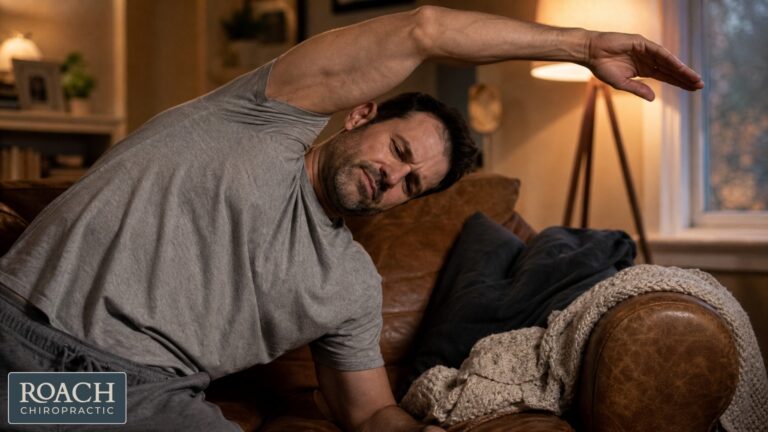
You know that feeling — a stiff neck, a tight back, or fingers that just feel “stuck.”
It can be tempting to twist, pull, or push until you hear that satisfying pop.
For many people, self joint cracking feels harmless, even helpful. But when you force your body into positions it isn’t designed for, you may be stressing the wrong tissues, irritating joints, and masking deeper issues that need proper care.
This post explores what really happens when you crack your own joints, the risks involved, and how a chiropractor can help you move better, feel better, and protect your long‑term joint health.
Throughout, we will keep things practical, clear, and focused on safe options — including when it makes sense to see a chiropractor in Bedford for a proper assessment.
What is actually happening when joints “crack”?
The science behind that popping sound
Most of the time, the popping or cracking sound you hear in a joint is related to gas movement inside the joint space.
Synovial joints — like your knuckles, spine, and knees — are filled with fluid that helps them glide smoothly. When you move or stretch a joint quickly:
- Pressure changes inside the joint
- Gas bubbles form or collapse in the fluid
- A sharp sound is produced — the “crack” or “pop”
This is called cavitation. On its own, cavitation is not necessarily harmful. The concern is not the sound itself, but how you are moving the joint to create it.
Where self joint cracking becomes risky
When you crack your own joints, especially your neck or back, you often:
- Move multiple joints at once, not just the one that is restricted
- Force movement at the end of your range of motion
- Rely on momentum instead of controlled, specific movement
Over time, this can irritate ligaments, strain muscles, and create instability in the joints you keep moving too far — while the truly stiff or restricted joints remain stuck.
A chiropractor’s adjustment is very different: it is targeted, controlled, and based on a detailed assessment of how each joint is moving.
Common questions about cracking your own joints
1. Is it bad to crack my knuckles?
Occasional, gentle knuckle cracking is unlikely to cause serious damage for most people.
However, if you:
- Force the movement
- Feel pain, swelling, or weakness
- Notice your joints becoming more “loose”
then it may be a sign you are stressing the ligaments and soft tissues. If you crack your knuckles constantly out of habit, it is worth talking to a chiropractor or other health professional about joint health and alternative strategies.
2. Can cracking my own neck be dangerous?
Yes, cracking your own neck can be risky, especially if you:
- Use your hands to twist or pull your head
- Push into pain or stiffness
- Feel dizzy, numb, or experience headaches afterward
The neck contains delicate joints, important nerves, and major blood vessels. Forceful or repeated self manipulation can irritate these structures and may contribute to instability or strain. Neck adjustments should always be performed by a trained professional such as a chiropractor.
3. Does joint cracking cause arthritis?
Current research does not show that simple joint cracking directly causes arthritis.
However, repeatedly forcing joints beyond their normal range, especially if it causes pain or swelling, may contribute to wear, irritation, or instability over time.
Arthritis is influenced by many factors — including age, genetics, previous injuries, and body weight. Protecting your joints with good movement habits, strength, and alignment is still very important.
4. Why do I feel relief after cracking my joints?
You may feel temporary relief because:
- Muscles around the joint briefly relax
- Pressure inside the joint changes
- Your nervous system receives a burst of sensory input that can “dampen” pain signals
The problem is that this relief is often short‑lived. If you need to crack the same area repeatedly to feel better, it is a sign that the underlying issue — such as joint restriction, muscle imbalance, or posture — is not being addressed.
5. When should I see a chiropractor instead of cracking my own joints?
You should consider seeing a chiropractor if you:
- Feel the need to crack the same joints over and over
- Experience pain, tingling, or numbness with or after cracking
- Notice reduced strength, coordination, or range of motion
- Have a history of injuries, accidents, or chronic joint pain
A chiropractor can assess how your spine and other joints are moving, identify areas of restriction or instability, and provide safe, specific adjustments along with exercises and lifestyle guidance.
Key numbers that highlight the impact of joint problems
- Joint conditions are common: About 1 in 6 adults has diagnosed osteoarthritis, making it one of the most common joint conditions.
Source: Public Health Agency of Canada — Osteoarthritis overview
https://www.canada.ca/en/public-health/services/publications/diseases-conditions/osteoarthritis.html - Millions live with osteoarthritis: More than 4 million adults — roughly 1 in 7 — are living with osteoarthritis, often experiencing pain, stiffness, and reduced mobility.
Source: Arthritis Society Canada — The Burden of Osteoarthritis
https://arthritis.ca/about-arthritis/arthritis-types-(a-z)/types/osteoarthritis - Joint pain affects daily life: In adults diagnosed with osteoarthritis, a large proportion report pain in weight‑bearing joints such as the knees and hips, which can limit walking, work, and recreation.
Source: Statistics Canada — Prevalence of osteoarthritis by site of joint pain
https://www150.statcan.gc.ca/t1/tbl1/en/tv.action?pid=1310009603
These numbers underline why protecting your joints — rather than forcing them — is so important.
How self joint cracking can lead to symptoms and problems
Warning signs you may be overdoing it
If you regularly crack your own joints, pay attention to:
- Pain during or after cracking — not just a sound, but discomfort
- Swelling or warmth around the joint
- A feeling of looseness or instability
- Clicking or grinding that is new or worsening
- Reduced strength or coordination in the area
These symptoms may indicate irritation of ligaments, joint surfaces, or surrounding muscles.
How repeated self manipulation can affect your body
Over time, forceful or frequent self joint cracking may:
- Stretch ligaments that are meant to stabilize the joint
- Encourage movement in already mobile joints instead of stiff ones
- Contribute to muscle imbalances as your body tries to “guard” the area
- Mask underlying issues such as poor posture, previous injuries, or joint degeneration
A chiropractor focuses on restoring balanced movement — helping stiff joints move better and supporting unstable joints with appropriate care and exercises.
A safer step‑by‑step approach when your joints feel tight
What to do instead of forcing a crack
When you feel the urge to crack your neck, back, or other joints, try this simple sequence:
- Pause and check in
Notice where you feel tightness. Is it sharp, dull, or achy? Does it radiate? - Change your position
Stand up if you have been sitting. Walk for a minute. Gently roll your shoulders or hips. - Use gentle, pain‑free movement
Move the area through a comfortable range — slow neck rotations, shoulder circles, or hip shifts — without forcing a pop. - Add controlled breathing
Take slow, deep breaths to help your muscles relax. Exhale as you move gently. - Apply light mobility work
Use simple stretches or mobility drills (see the next section) instead of quick, forceful twists. - Monitor how long relief lasts
If tightness returns quickly or you feel you “need” to crack the joint again, it is a sign to seek a professional assessment. - Book a chiropractic evaluation
A chiropractor can determine whether the issue is joint restriction, muscle tension, posture, or something else — and create a plan tailored to you.
Gentle exercises and stretches to ease the urge to crack
Always move within a comfortable, pain‑free range. If any exercise causes pain, stop and have it checked by a professional.
Simple neck mobility sequence
- Chin tucks
Sit or stand tall. Gently draw your chin straight back, as if making a “double chin,” without tilting your head up or down. Hold for 3–5 seconds, repeat 8–10 times. - Neck side bends
Slowly bring your right ear toward your right shoulder (do not shrug). Hold for 10–15 seconds, then switch sides. Repeat 3–5 times each side. - Neck rotations
Turn your head gently to look over one shoulder, then the other. Stay within a comfortable range and avoid bouncing.
Upper back and shoulder openers
- Seated thoracic rotation
Sit tall with arms crossed over your chest. Rotate your upper body to one side, keeping your hips facing forward. Hold briefly, then rotate to the other side. Repeat 8–10 times. - Doorway chest stretch
Place your forearms on either side of a doorway, elbows at shoulder height. Step forward until you feel a gentle stretch across your chest. Hold 20–30 seconds, repeat 2–3 times.
Hip and lower back relief
- Knee‑to‑chest stretch
Lying on your back, gently bring one knee toward your chest. Hold 20–30 seconds, then switch sides. Repeat 2–3 times. - Figure‑four stretch
Lying on your back, cross one ankle over the opposite knee. Gently draw the uncrossed leg toward your chest until you feel a stretch in the hip. Hold 20–30 seconds, repeat both sides.
These movements can reduce stiffness and the urge to crack your joints, while supporting healthier mobility patterns.
How chiropractic care supports short‑ and long‑term joint health
Immediate benefits you may notice
Many people report that, after chiropractic care, they experience:
- Easier movement in the neck, back, or other joints
- Reduced muscle tension and stiffness
- Improved comfort with daily activities such as sitting, lifting, or walking
- A decreased urge to crack their own joints
Chiropractic adjustments are designed to be specific and controlled — targeting the joints that truly need help, rather than moving everything at once.
Long‑term advantages of a chiropractic approach
Over time, consistent chiropractic care and home exercises can help:
- Improve overall spinal alignment and posture
- Support better joint mechanics and load distribution
- Reduce flare‑ups of recurring pain or stiffness
- Enhance body awareness, so you recognize early warning signs
- Encourage healthier habits around movement, work, and recreation
Instead of chasing short bursts of relief from self joint cracking, you build a more stable, resilient foundation for your joints.
Daily habits and routines that protect your joints
Small changes that make a big difference
You can support your joints and reduce the urge to crack them by:
- Varying your posture — change positions regularly instead of staying locked in one pose
- Setting up your workspace well — adjust chair, screen, and keyboard height to reduce strain
- Taking movement breaks — stand, walk, or stretch for a few minutes every 30–60 minutes
- Staying active — regular walking, strength training, and low‑impact exercise support joint health
- Listening to your body — sharp, persistent, or worsening pain is a signal to get checked
Working with a chiropractor as part of your routine
A chiropractor can:
- Assess how your spine and other joints are moving
- Provide specific adjustments where needed
- Recommend exercises tailored to your body and lifestyle
- Offer guidance on posture, ergonomics, and activity modifications
For many people, periodic chiropractic visits — combined with home exercises — become a key part of their wellness routine.
Why chiropractic care is a smart choice for joint concerns
Moving beyond quick fixes
Self joint cracking is a quick fix — it may feel good for a moment, but it does not:
- Address the root cause of stiffness or pain
- Correct underlying joint restrictions or imbalances
- Provide a long‑term plan for joint health
Chiropractic care focuses on understanding the “why” behind your symptoms and creating a plan that supports lasting change.
A whole‑person view of your spine and joints
Chiropractors look at:
- How your spine moves as a whole
- How your posture, work, and activities affect your joints
- How muscles, ligaments, and nerves are interacting
This broader view allows for more precise care than simply twisting or pulling until something pops. For someone who keeps cracking their own joints, this can be the difference between chasing relief and actually resolving the problem.
Recommended reading for deeper insight into joint health
- Osteoarthritis overview and risk factors
Public Health Agency of Canada — Osteoarthritis
https://www.canada.ca/en/public-health/services/publications/diseases-conditions/osteoarthritis.html - Comprehensive information on osteoarthritis and joint symptoms
Arthritis Society Canada — Osteoarthritis
https://arthritis.ca/about-arthritis/arthritis-types-(a-z)/types/osteoarthritis - Detailed data on arthritis and joint pain in adults
Statistics Canada — Arthritis and joint pain tables
https://www150.statcan.gc.ca/t1/tbl1/en/tv.action?pid=1310009603
These resources offer reliable, in‑depth information on joint conditions, symptoms, and long‑term impacts.
Ready to stop cracking your own joints and feel real relief?
If you are constantly twisting your neck, pulling on your back, or cracking your knuckles just to feel “normal” for a few minutes, your body is telling you something.
You do not have to rely on risky self joint cracking or live with recurring stiffness and discomfort. A thorough chiropractic assessment can identify what is really going on, explain your options clearly, and provide safe, specific care tailored to you.
If you live in or around Bedford and want a more sustainable solution for your joint health, contact Roach Chiropractic today to schedule an appointment and take the next step toward comfortable, confident movement.
SHARE THIS