7 Sciatica Exercises Stretches Mistakes Stealing 4 Pain-Free Weeks
Sciatica exercises and stretches can absolutely accelerate your recovery — but only when performed correctly. The uncomfortable truth is that many Bedford residents performing daily sciatic stretch routines are unknowingly delaying healing by weeks through a handful of fixable errors.
1. Forcing a Sciatic Stretch Through Pain Instead of Tension
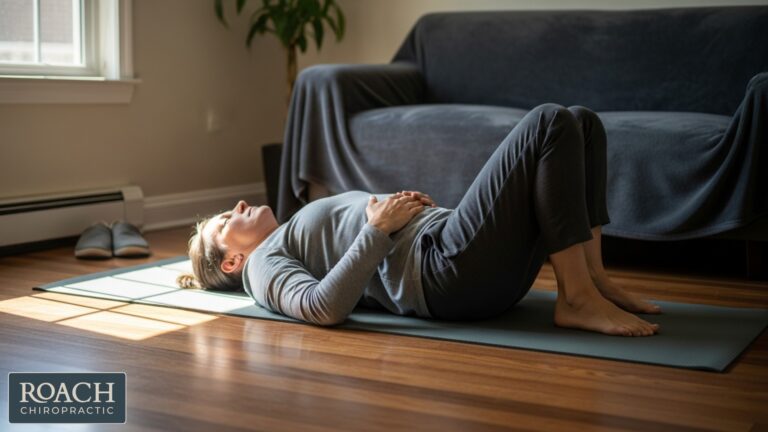
A productive sciatic stretch creates mild tension, not sharp or radiating pain — if you feel shooting discomfort down your leg, you’ve gone too far. Sciatica already involves an irritated nerve root, and pushing aggressively into pain signals floods the nerve with additional mechanical stress. The result is increased inflammation and a longer recovery window, not a shorter one. Ease to the point of gentle pull, hold for 20–30 seconds, and back off the moment pain sharpens. For a structured starting point, our sciatica exercise guide shows safe range-of-motion progressions suited to both early-stage and chronic cases. The NIH Sciatica Clinical Overview confirms that conservative, controlled movement — not aggressive stretching — is the evidence-based first-line approach.
2. Skipping the McGill Big 3 Exercises in Favour of Passive Stretching Alone
Passive stretching without core stabilisation is one of the most common reasons sciatica keeps returning. The McGill Big 3 exercises — the curl-up, side plank, and bird-dog — were developed specifically to build the deep spinal endurance that protects irritated nerve roots. Without them, your spine lacks the muscular “scaffolding” needed to hold decompressed disc positions between sessions. Many Bedford office workers assume that because their pain is in the leg, leg stretches are the answer. In reality, spine stability is what keeps disc pressure off the sciatic nerve long-term. Our full breakdown of the McGill Big 3 back pain relief method walks you through correct form for each movement. Add these to your routine before doubling down on passive sciatic stretches.
3. Using the Wrong QL Muscle Stretch Technique
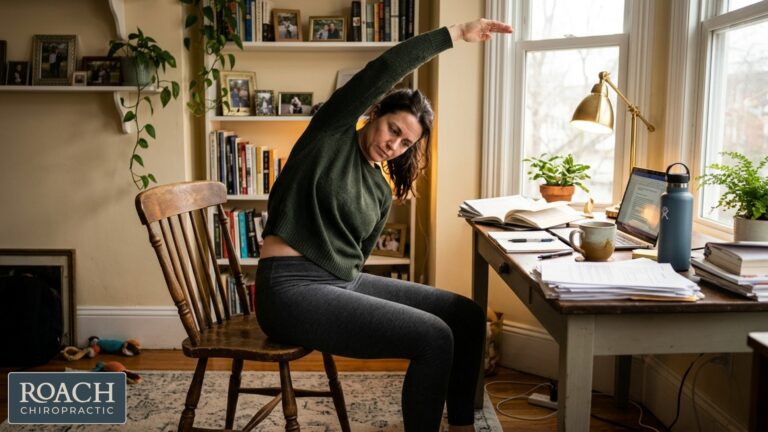
An incorrect QL muscle stretch can compress the very nerve you’re trying to free. The quadratus lumborum sits deep in your lower back, and when tight, it tilts the pelvis and tightens the lumbar region — directly worsening sciatic irritation. The most common mistake is performing a standing side-bend with a locked knee, which levers through the lumbar spine rather than lengthening the QL. A far safer option is the seated QL stretch: sit at the edge of a chair, cross one ankle over the opposite knee, and hinge forward slowly, keeping your spine long. To properly stretch quadratus lumborum, the pelvis must stay grounded. Our top 3 DIY recovery stretches for QL pain demonstrate safe variations. For more detail on the muscles contributing to lower back pain, see our three muscles causing lower back pain resource.
4. Overdoing Decompression at Home Without Professional Guidance
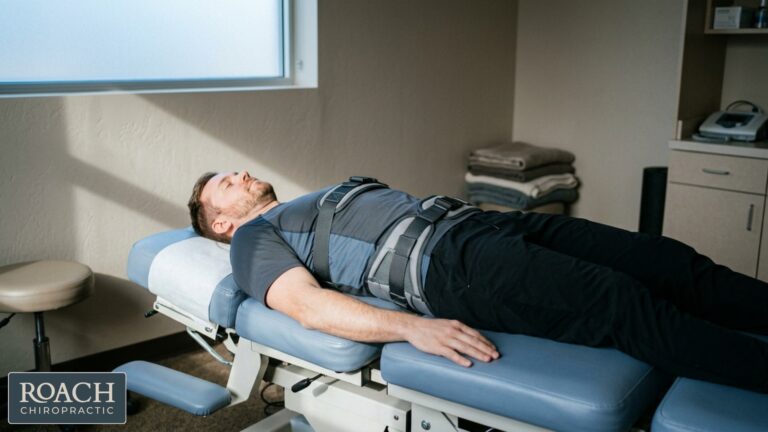
Spinal decompression, whether via an inversion table or hanging exercises, can provide temporary relief — but overdoing it creates joint instability that worsens sciatica over days. Many patients use decompression daily for extended periods, assuming more is better. Excessive decompression can hypermobilise lumbar segments, placing greater load on the surrounding musculature and re-irritating disc tissue. Professional-grade decompression is calibrated to specific spinal levels and disc conditions. The Cleveland Clinic Sciatica Guide highlights exactly this risk — that unsupervised self-care can make sciatica measurably worse. Limit home decompression to brief sessions (under 5 minutes) and discuss frequency with your chiropractor.
5. Ignoring Upper Cervical Alignment’s Role in Sciatica
Upper cervical misalignment affects the entire spine’s tension pattern, including the lumbar region where sciatica originates. If you’ve been searching for an upper cervical chiropractor near me specifically, you already understand that the top two vertebrae influence spinal cord tension from skull to sacrum. A head-forward posture — extremely common among Bedford desk workers — shifts the spine’s natural curve, increasing disc pressure at L4-L5 and L5-S1, the most frequent sciatica sites. Addressing only the lower back while ignoring cervical alignment is like inflating a tire while the rim is bent. If frequent neck cracking accompanies your back pain, that’s a signal worth investigating; our post on neck cracking explained covers the distinction between harmless cavitation and a structural issue that needs attention. Patients who ask “why does my neck crack so much” are often dealing with joint hypermobility tied to the same postural pattern driving their sciatica.
6. Neglecting Rib Stretches and Mid-Back Mobility
Tight thoracic segments and restricted rib joints increase lumbar compensation — and that compensation feeds directly into sciatic irritation. Rib stretches and thoracic rotation exercises release the mid-back stiffness that forces your lower lumbar spine to absorb excess movement. Many sciatica patients focus exclusively on the lumbar and piriformis region, completely skipping the thoracic spine. This is a significant oversight, particularly for Bedford residents who spend long hours at desks. Incidentally, the same thoracic restriction pattern also contributes to vertigo kinds linked to cervicogenic dysfunction — a reminder that the spine works as one integrated system. Our 3 home exercises to eliminate rib cage pain are a useful complement to any sciatica rehabilitation programme. Golfers in Bedford may also notice that stretches for golfers elbow and thoracic rotation drills overlap significantly — because rotational restriction at the thorax affects the entire kinetic chain down to the lumbar spine.
7. Skipping Joint Health Supplements While Doing All the Right Exercises
Exercise and stretching address mechanics — but without adequate nutritional support, inflamed spinal tissues heal more slowly. Joint health supplements including omega-3 fatty acids, magnesium, and vitamin D are among the most researched dietary supplements for joint health that support nerve tissue recovery and reduce systemic inflammation. Many sciatica patients diligently perform their exercises while consuming a diet high in inflammatory foods, essentially working against their own recovery. Acupuncturing — used here in the clinical sense of acupuncture therapy — is another evidence-informed complement that some patients incorporate alongside chiropractic care to address pain sensitisation along the sciatic nerve pathway. The Mayo Clinic Sciatica Treatment resource notes that multimodal care consistently outperforms single-modality approaches. For a practical overview of anti-inflammatory nutrition, our post on 5 overlooked foods that fight inflammation is a strong starting point, and our foods that cause joint inflammation guide is equally worth bookmarking.
Stop Letting Small Errors Steal Your Recovery Time
Each of these seven mistakes is entirely correctable — and correcting even two or three of them can meaningfully accelerate your return to pain-free movement. Bedford’s active, family-oriented community deserves access to sciatica care that addresses the whole picture: mechanics, stabilisation, cervical alignment, thoracic mobility, and nutrition together. At Roach Chiropractic, our hands-on, non-invasive approach is built around exactly that comprehensive framework — and we’re accepting new patients at our Bedford location right now.
Ready to stop guessing and start recovering? Contact Roach Chiropractic at 902-404-3828, email info@roachchiropractic.com, or book online at roachchiropractic.com. We’re located at 1160 Bedford Hwy Unit 101, Bedford, NS — and our team is here to help you reach your full health potential, naturally.
Frequently Asked Questions
What is the difference between the mild tension a sciatic stretch should produce versus the sharp pain that signals you have gone too far?
A productive sciatic stretch produces a gentle pull you can hold steadily for 20–30 seconds without the sensation intensifying or radiating down your leg. Sharp, shooting discomfort down the limb means the already-irritated nerve root is receiving additional mechanical stress, which drives inflammation rather than relieving it. The rule is simple: ease to tension, hold, and back off the moment the feeling sharpens into pain.
How do I correctly perform the seated QL stretch described in this post if I have limited hip flexibility?
Sit at the edge of a firm chair, cross one ankle over the opposite knee, and hinge forward slowly while consciously keeping your spine long rather than rounding through the lower back. If crossing the ankle is uncomfortable, place the foot on a low stool instead while maintaining the same forward-hinge motion. The critical detail is keeping the pelvis grounded throughout — lifting or rotating the hip defeats the purpose and can compress the lumbar spine instead of lengthening the quadratus lumborum.
Why are the McGill Big 3 exercises recommended over simply doing more piriformis and hamstring stretches for recurring sciatica?
Passive stretches temporarily reduce tissue tension but do not build the deep spinal endurance needed to keep disc pressure off the sciatic nerve between sessions. The McGill Big 3 — the curl-up, side plank, and bird-dog — train the muscular “scaffolding” that holds decompressed disc positions, which is why sciatica keeps returning for people who rely on stretching alone. Passive stretching and stabilisation exercises serve different functions, and skipping the latter is one of the most common reasons leg pain cycles back.
How long should a home inversion table or hanging decompression session last before it risks hypermobilising lumbar segments?
Sessions should be kept under five minutes, and frequency should be discussed directly with a chiropractor who knows your specific disc level and condition. Exceeding that threshold can hypermobilise lumbar segments, shifting excess load onto the surrounding musculature and re-irritating disc tissue — the opposite of the relief you are seeking. Professional-grade decompression is calibrated to individual spinal levels in a way that unsupervised home use cannot replicate.
If upper cervical misalignment contributes to increased disc pressure at L4-L5 and L5-S1, does correcting that alignment alone ever resolve sciatica symptoms without treating the lumbar spine directly?
Cervical correction can meaningfully reduce whole-spine tension and lower lumbar disc pressure, but it is rarely sufficient on its own for established sciatica, particularly when the lumbar segments have been irritated long enough to develop local inflammation. The post frames cervical alignment as one piece of a comprehensive picture that also requires core stabilisation, thoracic mobility, and nutritional support. Addressing cervical posture while ignoring lumbar mechanics — or the reverse — leaves significant recovery potential on the table.
SHARE THIS