Safe Quadratus Lumborum Exercises During Pregnancy
Pregnant women do not need to avoid exercise to manage back pain — targeted, safe quadratus lumborum (QL) stretches and gentle core work can actually relieve the low back curve and sciatica discomfort that come with a growing belly, without putting mother or baby at risk. The myth that “rest is best” for every ache of pregnancy has kept too many Bedford, NS moms sitting still when a few minutes of the right movement could ease their pain. This post separates the exercise myths from the evidence so you know exactly what’s safe, what helps, and when it’s time to see a chiropractor.
Myth: Pregnant Women Should Avoid All Exercise When Back Pain Strikes
Reality: Most pregnant women can and should keep moving, because gentle, targeted exercise is one of the most effective ways to manage the low back pain that affects up to 70% of pregnancies.
Complete rest sounds protective, but inactivity often makes pregnancy back pain worse by allowing hip flexors and the QL muscle to stiffen further while core stabilizers weaken. The ACOG exercise pregnancy guidelines confirm that healthy pregnant women are encouraged to get at least 150 minutes of moderate activity weekly, and that includes stretching and low-impact strengthening. The ACOG Committee Opinion 804 goes further, stating that physical activity during pregnancy has few risks and is associated with benefits for most people. The key is choosing movements suited to pregnancy — not stopping movement altogether.
At Roach Chiropractic in Bedford, we walk patients through which stretches are appropriate for their trimester and pain pattern, so exercise becomes a tool for relief rather than a source of anxiety.
Myth: The QL Muscle Doesn’t Matter for Pregnancy Back Pain
Reality: The quadratus lumborum is one of the primary muscles driving the curved lower back and one-sided pain many women feel as pregnancy progresses, because it connects the pelvis directly to the ribs and spine.
The QL muscle runs from the top of the pelvis (iliac crest) up to the lowest rib and the lumbar vertebrae. It stabilizes the low back, helps you hike a hip, and controls side-bending. As pregnancy weight shifts the center of gravity forward, the pelvis tilts and the lumbar spine compensates with an exaggerated arched lower back — a posture pattern sometimes called hyperlordosis. The QL tightens to try to stabilize that new curve, and because it often works harder on one side than the other, quadratus lumborum pain on one side is a common complaint in the second and third trimesters.
A simple quadratus lumborum tightness test — gently side-bending while seated and comparing range side to side — often reveals restriction on the side that’s compensating hardest. Left unaddressed, that imbalance feeds the curved lower back pattern and can eventually irritate the sciatic nerve pathway nearby. Understanding this mechanism is why generic back stretches often fall short, and why a targeted quadratus lumborum stretch works better than stretching everything but the muscle actually causing the pain.
Myth: Any Stretch Will Fix an Arched Lower Back During Pregnancy
Reality: Only a handful of specific quadratus lumborum exercises and rib stretches actually target the muscle groups responsible for pregnancy’s low back curve, and they need to be modified as the belly grows.
These four movements are commonly recommended by chiropractors and are echoed in the Mayo Clinic back pain tips for pregnancy-safe stretching. Hold each for 20–30 seconds per side and repeat two to three times, stopping immediately if you feel sharp pain, dizziness, or shortness of breath.
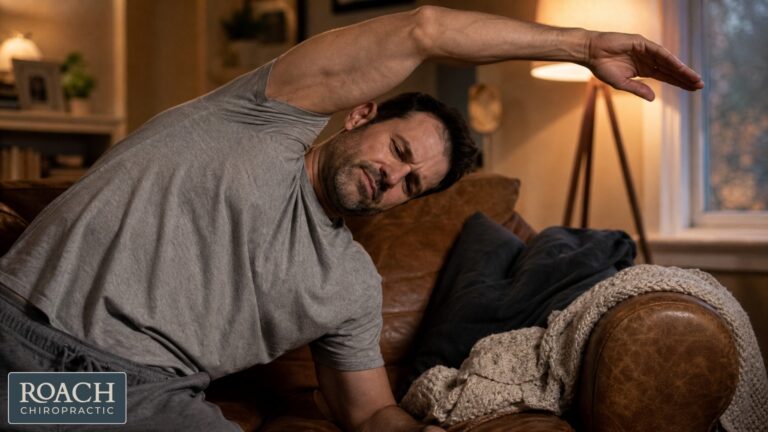
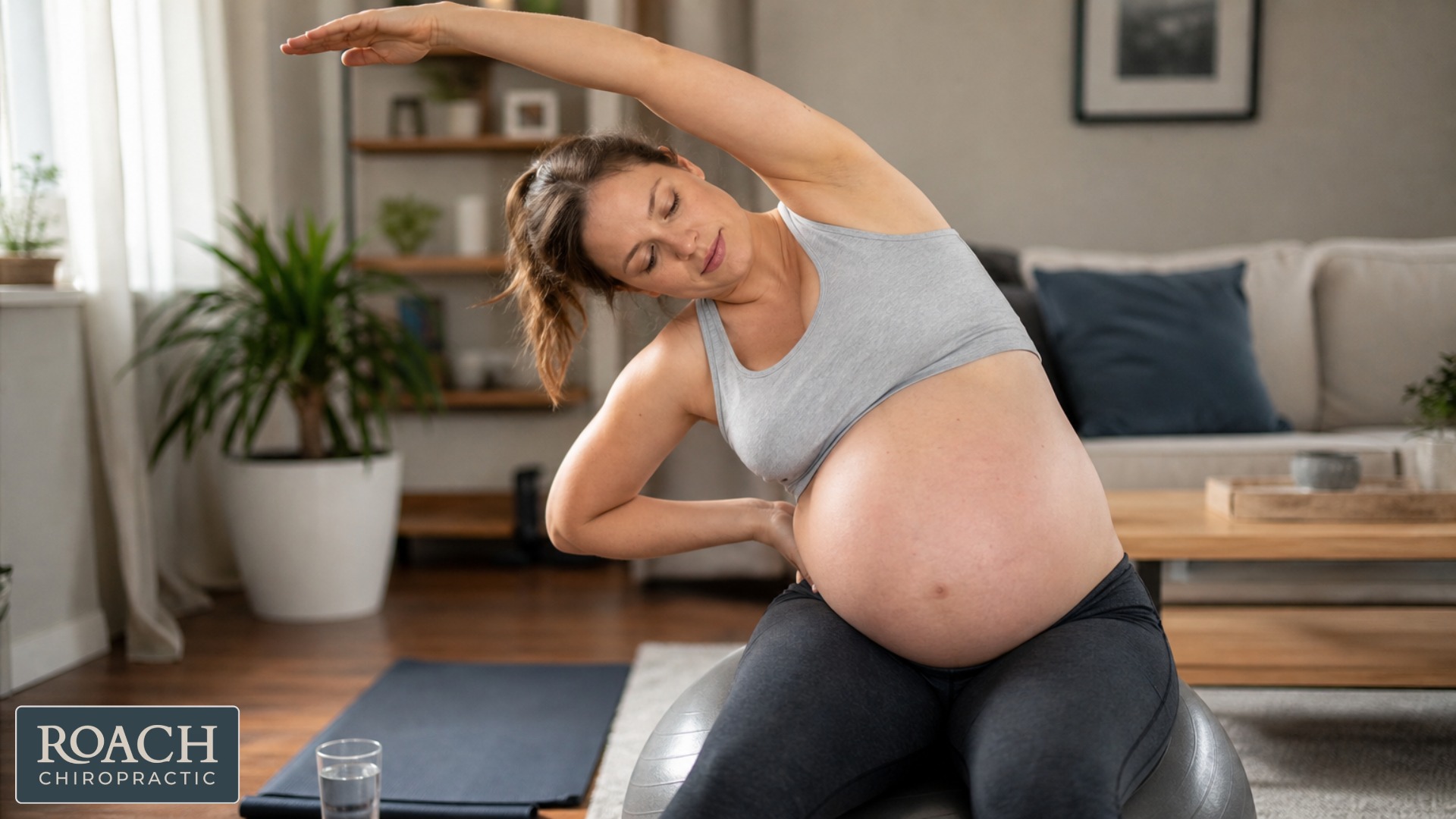
- Seated side-bend rib stretch: Sit tall on a stability ball or chair, reach one arm overhead, and lean gently to the opposite side. This directly lengthens the QL and the ribs it attaches to, easing the pull that creates a curved lower back.
- Supported child’s pose: Kneel with knees wide apart to make room for the belly, then reach both arms forward and sit hips back toward the heels. This decompresses the lumbar spine without any pressure on the abdomen.
- Modified cat-cow: On hands and knees, alternate between gently arching and rounding the spine. This keeps the joints of the low back mobile and counters the fixed arched lower back posture that develops from sitting.
- Standing hip hike release: Stand on a low step with one foot hanging off the edge, then let that hip drop and lift slowly. This isolates the QL directly and is one of the most effective single-muscle QL muscle stretch options available.
Many patients also benefit from a pregnancy-modified version of the McGill Big 3 exercises — the curl-up, side plank, and bird dog developed by spine researcher Dr. Stuart McGill. The McGill Big Three build core stability without the spinal flexion or rotation that can aggravate pregnancy back pain, and our team can show you how to modify each one safely for your trimester.
Myth: Sciatica Stretching Always Solves Pregnancy Nerve Pain
Reality: Sciatica stretches help when the pain is caused by muscle tightness compressing the nerve, but they won’t resolve pain caused by joint misalignment, disc irritation, or a QL strain — and pushing through those cases can make things worse.
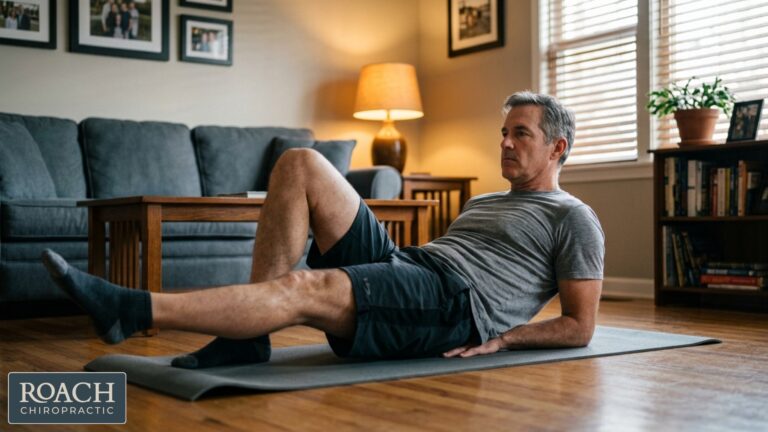
A gentle seated figure-4 stretch or reclined piriformis stretch is a reasonable first sciatica stretch to try if you feel tightness and mild tingling down the back of one leg. These sciatica exercises stretches work by releasing the piriformis and glute muscles that sit near the sciatic nerve pathway, which can become compressed as pregnancy hormones loosen surrounding ligaments.
Sciatica stretching stops being enough when pain radiates below the knee, when you feel numbness or weakness rather than just tightness, or when the discomfort doesn’t ease within a few days of consistent stretching. In those cases, the cause is often structural — a rotated pelvis, a compressed disc, or a QL strain rather than simple muscle tension — and it needs hands-on assessment. QL muscle strain recovery time for a mild strain is typically two to four weeks with proper care, but a more significant quadratus lumborum tear can take eight to twelve weeks and usually requires professional guidance to heal correctly rather than home stretching alone.
Myth: Chiropractic Adjustments and Decompression Are Too Risky During Pregnancy
Reality: Pregnancy-specific chiropractic techniques are designed with the pregnant body in mind, and gentle spinal decompression and adjustments are commonly used safely throughout all three trimesters when performed by a trained chiropractor.
At Roach Chiropractic, we use pregnancy-safe positioning — including side-lying and specialized tables with a cutout for the belly — so there’s never pressure placed on the abdomen. Flexion-distraction decompression gently creates space between the lumbar vertebrae to take pressure off irritated discs and nerve roots, which is often exactly what’s needed when sciatica stretching alone hasn’t worked. Many chiropractors, including our team, also use the Webster technique, a specific sacral analysis and adjustment protocol taught through the International Chiropractic Pediatric Association, to reduce sacral misalignment and the ligament tension it places on the pelvis during pregnancy.
Home stretches and in-office care work best together. Your QL muscle stretch routine keeps tissue mobile between visits, while adjustments and decompression correct the underlying joint restrictions that stretching alone can’t reach. This is the same hands-on, non-invasive philosophy Bedford families have relied on at Roach Chiropractic — one reason area residents searching for chiropractors Halifax and the wider Bedford-Sackville area trust our approach over generic stretch handouts.
This whole-family focus extends beyond pregnancy care. Partners dealing with craning neck posture from long hours at a laptop, teenagers curious about how to crack a neck safely instead of habitually self-manipulating a neck crack that can mask real joint dysfunction, or a grandparent asking about stretches for golfers elbow after a summer of golf — our team addresses all of it, because chiropractic care at Roach Chiropractic is built around the whole household, not one isolated complaint.
Myth: Pregnancy Back Pain Is Just Something You Have to Live With
Reality: Ongoing pregnancy back pain is common but not something you need to simply tolerate until delivery, and certain warning signs mean you should seek care right away rather than continuing to stretch at home.
Contact your care provider or seek urgent care immediately if you experience sudden severe swelling, a persistent severe headache, vision changes, regular contractions before term, fever, or a sudden loss of bladder or bowel control — these are not chiropractic concerns and need immediate medical attention.
See a chiropractor when back or sciatic pain hasn’t improved after about two weeks of consistent, gentle stretching; when pain radiates below the knee or into the foot; when you notice numbness, tingling, or weakness in a leg; or when the pain disrupts sleep or daily function. These are signs the QL muscle, pelvis, or a lumbar disc needs a hands-on assessment rather than more stretching alone.
Getting the Support You Need in Bedford, NS
The corrected picture is simple: exercise during pregnancy isn’t the enemy of a healthy back, and a few targeted quadratus lumborum stretches, rib stretches, and modified McGill Big 3 exercises can meaningfully ease the curve in your lower back and related sciatica discomfort. What stretching alone can’t fix — a misaligned pelvis, a compressed disc, or a genuine QL strain — is exactly where gentle chiropractic decompression and pregnancy-safe adjustments come in.
Roach Chiropractic, located at 1658 Bedford Hwy, Unit 95 in Bedford, NS, has built its practice on hands-on, non-invasive care for the whole family, from expecting mothers to office workers to seniors managing joint pain. If your low back curve, sciatica, or general pregnancy discomfort hasn’t responded to home stretching, call us at 902-404-3828 or email info@roachchiropractic.com to book an assessment. You can also visit roachchiropractic.com to learn more about our approach and start your journey to better health today.
Frequently Asked Questions
How do I know if my QL muscle is tight on one side during pregnancy?
Try the quadratus lumborum tightness test described in this post: sit tall, gently side-bend to each side, and compare how far you can go before feeling a pull. A noticeable restriction on one side usually points to the QL working overtime to stabilize the exaggerated lower back curve that develops as pregnancy weight shifts your center of gravity forward.
What’s the right way to do the standing hip hike release without straining my back?
Stand on a low, stable step or curb with one foot hanging off the edge, keep your standing leg steady, and slowly let the free hip drop and then lift using only the muscles at your waist. Move slowly and hold each position briefly, stopping right away if you feel sharp pain, dizziness, or shortness of breath, since this movement isolates the QL directly and doesn’t require force to be effective.
Should I try sciatica stretches or see a chiropractor first for one-sided lower back pain?
Start with a gentle seated figure-4 or reclined piriformis stretch if you’re only feeling tightness or mild tingling, since this addresses muscle-related nerve compression on its own. If pain radiates below the knee, you notice numbness or weakness, or the stretching hasn’t helped within about two weeks, the cause is more likely a rotated pelvis, compressed disc, or QL strain that needs hands-on assessment rather than more stretching.
How often should I do pregnancy-safe chiropractic adjustments alongside my QL stretches at home?
There’s no one-size-fits-all schedule, since it depends on how your low back curve and sciatica symptoms are responding to home stretching between visits. At Roach Chiropractic, home QL stretches keep tissue mobile day to day while in-office adjustments and flexion-distraction decompression address the joint restrictions stretching alone can’t reach, so your visit frequency is set based on how you’re progressing.
Is it safe to keep stretching if I have a QL strain instead of just tight muscles?
A mild QL strain typically needs two to four weeks of proper care to heal, while a more significant tear can take eight to twelve weeks and usually shouldn’t be managed with home stretching alone. Because a strain feels similar to simple tightness at first, professional guidance helps confirm which one you’re dealing with before you continue any stretching routine.
SHARE THIS