Bedford NS: 3 in 5 Adults See Acupuncture Results in Week 1
Acupuncture delivers measurable pain relief — and for many adults in Bedford, NS, that relief begins within the first week of treatment. If you’re dealing with back pain, sciatica, neck stiffness, or joint discomfort near areas like Basinview, Hammonds Plains Road, or the Bedford waterfront, acupuncturing alongside chiropractic care may be the non-invasive solution your body has been waiting for.
How Does Acupuncturing Work — and Why Does It Work So Fast?
Acupuncture works by stimulating specific acupuncture points along the body’s nerve and muscle pathways, triggering the release of endorphins and reducing inflammatory signals. According to NIH Acupuncture Effectiveness Research, clinical evidence supports acupuncture for chronic low back pain, neck pain, osteoarthritis, and headaches — conditions that affect a large portion of Bedford adults every day.
An NIH Clinical Acupuncture Trial Results involving 800 participants found that acupuncture significantly improved pain levels and physical function compared to conventional care alone. The acupuncture procedure itself involves the placement of hair-thin acupuncture needles at targeted points — most patients report minimal discomfort and noticeable changes within 1–3 sessions.
At Roach Chiropractic Centre in Bedford, acupuncturing is used alongside hands-on chiropractic adjustments to address the root cause of your pain — not just the symptoms. Johns Hopkins Acupuncture Overview recommends discussing your full health history with your provider before starting, which is exactly the approach taken at every new patient visit here.
The QL Muscle: Bedford’s Most Overlooked Back Pain Culprit
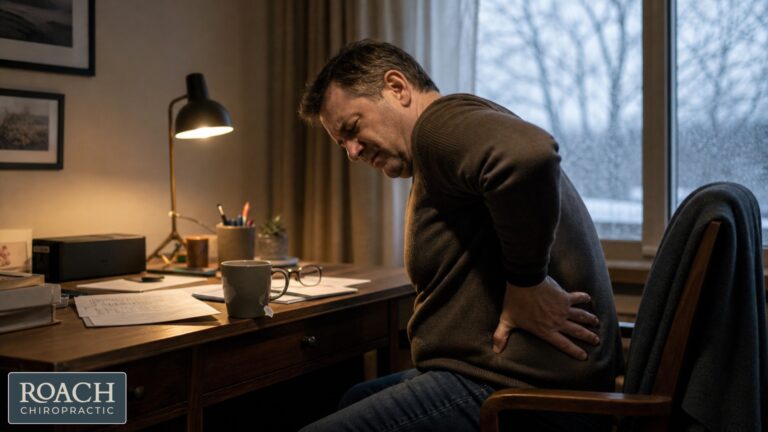
The quadratus lumborum (QL) is a deep lower back muscle that, when tight or strained, causes the sharp, locking back pain many Bedford residents mistake for a disc problem. A proper ql muscle stretch can provide immediate relief and protect the spine’s natural curve long-term.
To stretch quadratus lumborum safely, try these two approaches:
- Seated QL stretch: Sit upright in a chair, cross one ankle over the opposite knee, and lean forward gently until you feel a pull deep in the lower back on the raised-hip side. Hold 20–30 seconds each side.
- Side-lying rib stretch: Lie on your side over a rolled towel placed beneath your lower ribs. Let gravity open the lateral trunk. These rib stretches decompress the QL attachment points effectively.
For a full exercise guide, Roach Chiropractic’s own resource on Top 3 DIY Recovery Stretches for QL Pain walks you through each movement step by step. If your QL tightness is persistent, spinal decompression therapy at our Bedford clinic can relieve the compressive load that keeps this muscle locked up.
McGill Big 3 Exercises: The Gold Standard for Core Stability
The McGill Big 3 exercises — developed by spine biomechanics expert Dr. Stuart McGill — are the most clinically supported core rehabilitation movements for chronic low back pain. The McGill Big 3 are: the curl-up, the side plank, and the bird dog.
- Curl-up: Lie on your back with one knee bent. Place hands under the lower back. Lift only your head and shoulders — never the full trunk. Hold 8–10 seconds.
- Side plank: Support your body on one forearm and the side of your foot. Keep the spine in a neutral position. Hold 8–10 seconds.
- Bird dog: From all fours, extend the opposite arm and leg simultaneously. Hold 8–10 seconds. This restores the spine natural curve and trains deep stabilisers without loading injured discs.
For a deeper breakdown, see Roach Chiropractic’s guide: Fix Your Back Pain With the McGill Big 3.
Sciatica Exercises and Stretches for Daily Relief in Bedford
Effective sciatica exercises stretches reduce nerve compression along the sciatic pathway, easing the radiating leg pain that disrupts daily life for so many active adults over 40. The most reliable sciatic stretch for beginners is the supine piriformis stretch: lie on your back, cross one ankle over the opposite thigh, and draw both legs gently toward your chest until you feel a deep glute stretch.
Other productive sciatica exercises stretches include:
- Standing hamstring stretch against a low surface (like a park bench along the Bedford waterfront trail)
- Knee-to-chest stretch held for 30 seconds per side
- Seated piriformis stretch — same motion as the seated QL stretch, held longer
If sciatic pain follows you through summer activities or a round of golf, our post on Summer Activities and Sciatica in Bedford covers sport-specific recovery strategies. Chiropractic adjustments combined with acupuncturing often accelerate sciatic nerve recovery faster than either approach alone.
Why Does My Neck Crack So Much? Upper Cervical Care Explained
A frequent neck crack is usually caused by gas bubbles releasing from the synovial fluid in your cervical joints — but when it happens constantly, it often signals joint hypermobility, muscular tension, or misalignment in the upper cervical spine. If you’ve been searching for an upper cervical chiropractor near me in Bedford or the greater Halifax area, precise cervical adjustments can restore proper joint mechanics and reduce that chronic urge to self-crack.
Repeatedly forcing a neck crack on your own can stretch the surrounding ligaments and worsen instability over time. For a full explanation of what’s happening and when to seek care, read Neck Cracking Explained: Harmless Habit or Hidden Issue. Among Halifax chiropractors and those serving the Bedford corridor, Roach Chiropractic’s hands-on, non-invasive cervical approach is a trusted choice for patients managing neck stiffness alongside conditions like different vertigo kinds — including cervicogenic vertigo, which originates from upper cervical joint dysfunction.
Golfers Elbow, Joint Supplements, and Rounding Out Your Recovery
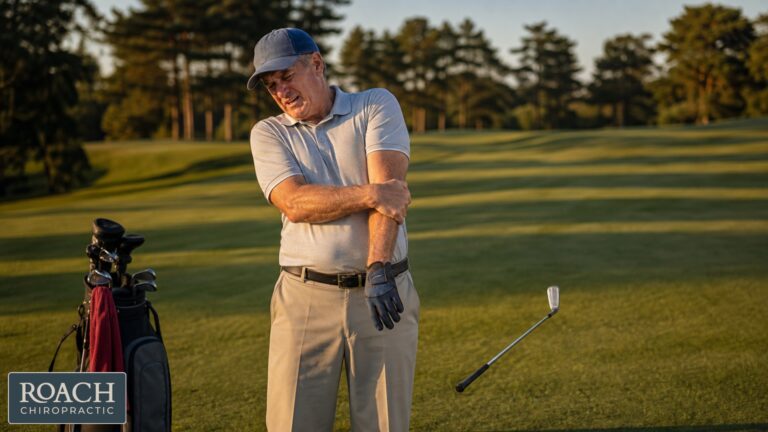
Active adults in Bedford — whether hiking Blue Mountain–Birch Cove Lakes or swinging a club — frequently experience lateral and medial elbow pain. Stretches for golfers elbow include a wrist flexor stretch (arm extended, palm up, fingers gently pulled back) and a forearm pronation/supination exercise using a light weight. Roach Chiropractic’s resource on Effective Golfer’s Elbow Pain Relief Stretches provides a full routine.
Alongside physical care, the right joint health supplements support tissue recovery between visits. The most evidence-supported dietary supplements for joint health include:
- Omega-3 fatty acids — reduce systemic inflammation
- Glucosamine and chondroitin — support cartilage integrity
- Magnesium — aids muscle relaxation and nerve signalling
- Vitamin D3 — critical for bone density, especially during Nova Scotia’s lower-sunlight months
Always discuss dietary supplements for joint health with your chiropractor or primary care provider before starting, as some interact with medications.
Start Your Recovery at Roach Chiropractic in Bedford, NS
Roach Chiropractic Centre has been serving families, seniors, office workers, and active adults at 1160 Bedford Hwy, Unit 101 with traditional, hands-on chiropractic care focused on real, lasting results — not temporary fixes. Whether your priority is acupuncturing for back pain, QL muscle relief, sciatica management, or upper cervical care, our team builds a personalised plan around your body and your goals.
Call us at 902-404-3828, email info@roachchiropractic.com, or visit roachchiropractic.com to book your first appointment. Your journey to better health starts with one visit — and for 3 in 5 Bedford adults who try acupuncturing, meaningful relief begins within the very first week.
Frequently Asked Questions
What distinguishes cervicogenic vertigo from other vertigo kinds, and why would a chiropractor treat it?
Cervicogenic vertigo originates specifically from dysfunction in the upper cervical joints — not from the inner ear or neurological causes that drive other vertigo kinds. When the facet joints of the upper cervical spine are misaligned, they send faulty positional signals to the brain, producing dizziness that follows neck movement rather than head position changes alone. Precise upper cervical adjustments correct the mechanical source of those signals, which is why chiropractic care addresses this form of vertigo more directly than vestibular therapies designed for inner-ear conditions.
If I already do the McGill Big 3 exercises at home, how should I add the QL stretches without overloading my lower back in a single session?
The McGill Big 3 are stabilisation movements that brace the spine under load, while the seated QL stretch and side-lying rib stretch are passive decompression techniques — they work through opposing mechanisms, so pairing them in the same session is generally safe and complementary. A practical sequence is to perform the Big 3 first to activate deep stabilisers, then transition to the QL stretches as a cool-down to release the compressive tension that the exercises may accumulate. If your QL tightness persists despite this routine, spinal decompression therapy at the Bedford clinic can address the compressive load that home stretching alone may not fully resolve.
Acupuncturing and chiropractic adjustments are both offered at Roach Chiropractic — does combining them actually produce faster sciatic nerve recovery than either treatment on its own?
The post cites clinical evidence from an NIH trial involving 800 participants showing that acupuncture significantly outperforms conventional care alone for pain and physical function, and the clinic’s position is that combining acupuncturing with chiropractic adjustments accelerates sciatic nerve recovery beyond what either approach achieves individually. The rationale is mechanistic: acupuncture reduces inflammatory signalling along the nerve pathway while chiropractic adjustments correct the structural compression that initiated the irritation — two different entry points into the same problem. Whether the combined approach is appropriate for your specific sciatica pattern is determined during the full health history intake that precedes every new patient visit at Roach Chiropractic.
How many acupuncture sessions should a Bedford adult realistically expect before the 3-in-5 first-week result applies to them?
The first-week result referenced in the post reflects noticeable changes occurring within 1–3 sessions, meaning the window spans roughly one week of treatment for most patients presenting with conditions like chronic low back pain, neck pain, or joint discomfort. The 3-in-5 figure describes population-level outcomes, so individual response depends on the severity and chronicity of the condition, overall health status, and whether acupuncturing is being paired with chiropractic adjustments. Patients whose symptoms fall outside that initial responder group typically still show measurable progress — the timeline simply extends, which is why a personalised plan is built around each patient’s specific presentation at Roach Chiropractic.
The post recommends Vitamin D3 specifically for Nova Scotia’s lower-sunlight months — at what point does a supplement like that cross into territory I should clear with my chiropractor versus my family doctor?
Vitamin D3 interacts with calcium metabolism and can affect several medications including corticosteroids and certain heart drugs, which is why the post explicitly advises discussing all joint health supplements with a chiropractor or primary care provider before starting — not one or the other, but both where relevant. A chiropractor at Roach Chiropractic is well-positioned to assess D3 in the context of your bone density, musculoskeletal recovery, and existing treatment plan, while your family doctor holds the fuller picture of any prescriptions or systemic conditions that could create interactions. The safest approach is to raise the question at your initial or next chiropractic visit and let the two providers coordinate if your health history warrants it.
SHARE THIS