Restore Your Lower Back Curve in 8 Minutes This Winter
Your spine’s natural spinal curves — four gentle bends that form an S-shape — are the foundation of pain-free posture, shock absorption, and nerve function. A Bedford winter spent hunched over a laptop or couch can flatten your lower back curve in weeks, but eight minutes of targeted daily movement can restore it without a gym membership.
Why Winter Sitting Flattens Your Spine Natural Curve
Prolonged sitting erases the lumbar lordosis — the inward lower back curve — by shortening hip flexors and switching off the deep spinal stabilisers. Bedford’s cold months amplify this: outdoor activity drops, screen time rises, and most people spend 10-plus hours a day in a flexed, sedentary position.
The result shows up as a strained QL muscle (quadratus lumborum), tight hip flexors, and a flattened lumbar spine. If your back hurts sleeping, or you wake stiff every morning, a lost lumbar curve is often the culprit. You can read more about how sleep position affects spinal alignment in How You Sleep Can Impact Your Joints and Spine.
How Upper Crossed Syndrome Makes It Worse
Upper crossed syndrome — a predictable pattern of tight chest and neck muscles paired with weak deep neck flexors and mid-back muscles — compounds lumbar flattening. When your head drifts forward (craning neck posture), the thoracic spine rounds, pulling the lumbar spine out of its natural curve below.
Common signs include a persistent neck crack when you rotate your head, frequent headaches, and upper-back tightness. If you’re asking yourself “why does my neck crack so much?” the answer is often uneven joint loading caused by this posture pattern. Neck Cracking Explained: Harmless Habit or Hidden Issue covers this in detail.
Upper crossed syndrome exercises — chin tucks, wall angels, and thoracic extensions — are built into the routine below to address both ends of the problem.
What You’ll Need
- A yoga mat or carpeted floor
- A firm pillow or rolled towel
- Eight minutes (set a timer)
- Bare feet for proprioceptive feedback
Step 1: McGill Big 3 — Core Stability First (3 Minutes)
The McGill Big 3 exercises — the curl-up, bird-dog, and side bridge — are the evidence-backed starting point for restoring lumbar stability without aggravating discs. Developed by spine researcher Dr. Stuart McGill, these three moves protect the spine natural curve while building the deep core endurance that keeps it there.
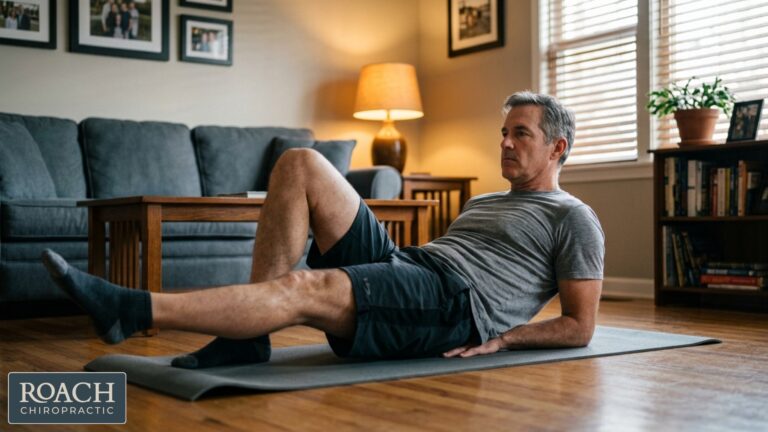
- Curl-up: Lie on your back, one knee bent. Hands under the lumbar curve. Lift only your head and shoulders. Hold 8 seconds × 3 reps.
- Bird-dog: On hands and knees, extend opposite arm and leg. Hold 8 seconds × 5 reps each side. This is core QL muscle strengthening without spinal loading.
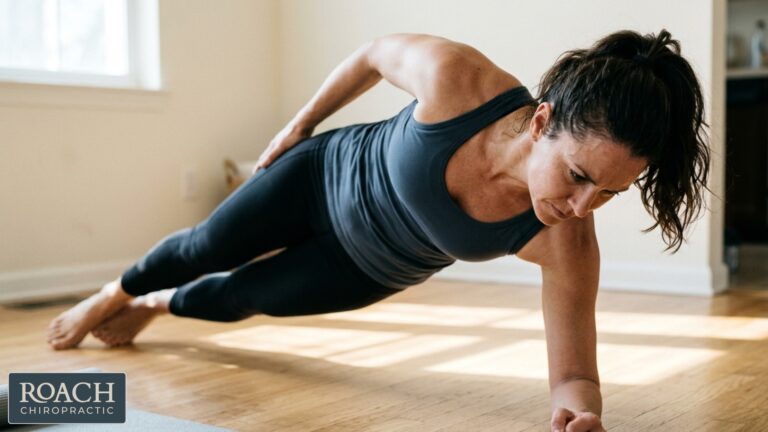
- Side bridge: From your elbow and knees, lift your hips. Hold 8 seconds × 3 reps each side.
See the full breakdown at Fix Your Back Pain With the McGill Big 3. The NIH lumbar exercise research confirms that core-stabilisation protocols like the McGill Big 3 significantly reduce chronic lower back pain.
Step 2: Sciatic Stretch and QL Release (3 Minutes)
A tight piriformis and overloaded QL are the two muscles most responsible for the deep ache people feel after a sedentary Bedford winter. A sciatic stretch (supine figure-4) and a seated QL stretch address both in under three minutes.
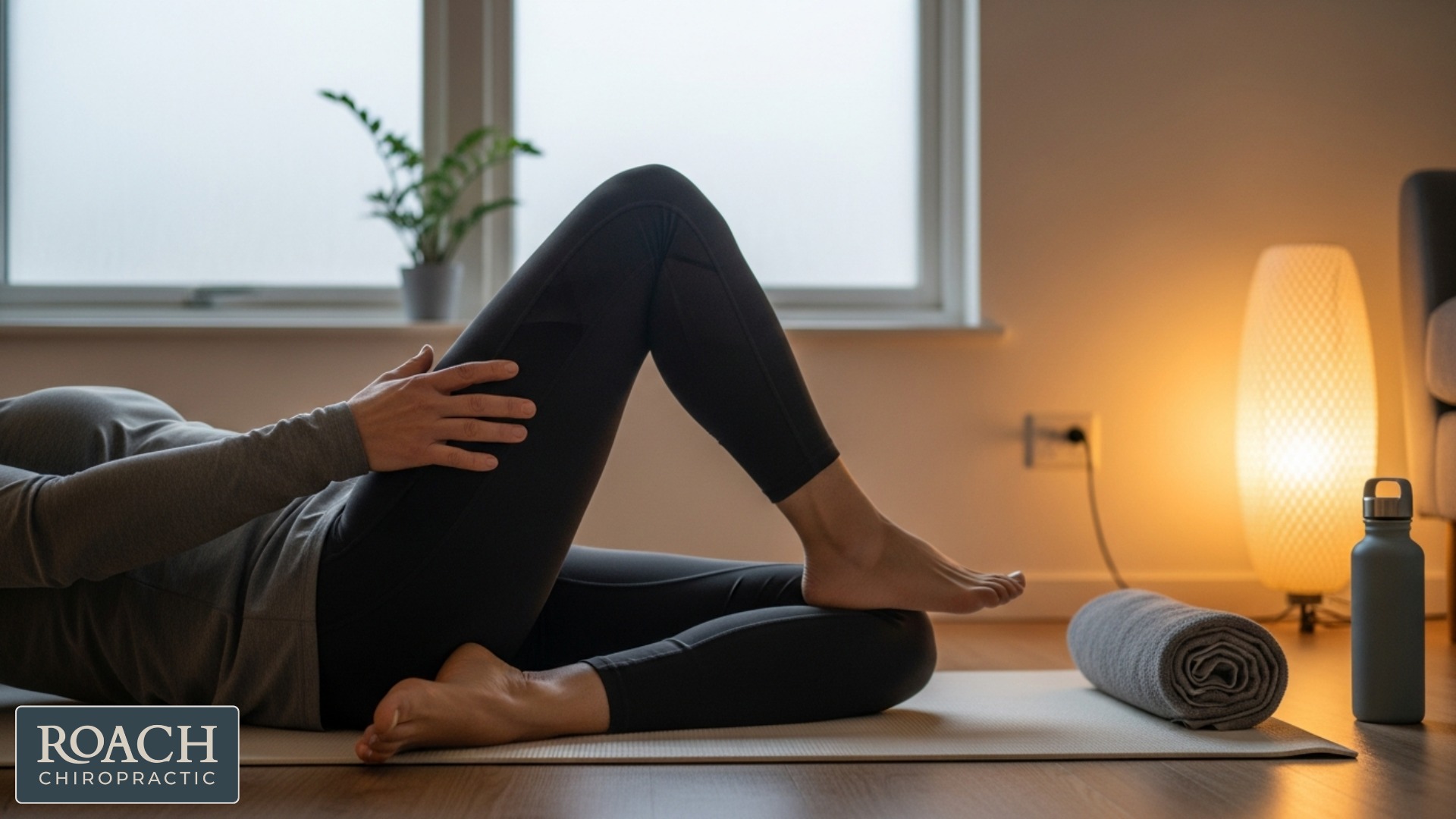
- Supine figure-4 (stretch sciatica): Lie on your back. Cross one ankle over the opposite knee and gently pull the thigh toward you. Hold 30 seconds each side. This is one of the most effective sciatica exercises stretches for home use.
- Seated QL stretch: Sit tall in a chair. Reach one arm overhead and lean to the opposite side. Hold 20 seconds × 2 each side. This directly relieves the QL back tension that pulls the lumbar spine flat.
For more QL strengthening and recovery options, visit Top 3 DIY Recovery Stretches for QL Pain. The AAOS spine conditioning guide also provides a structured lower-back program that pairs well with this routine.
Step 3: Rib Stretches to Open the Thoracic Spine (2 Minutes)
Thoracic mobility is the missing link in most home routines — without it, the lumbar spine compensates and loses its curve faster. Two simple rib stretches restore that mobility in two minutes.
- Thoracic extension over a rolled towel: Place a rolled towel under your mid-back. Gently extend over it, arms crossed on your chest. Hold 5 breaths. Move it one vertebra higher and repeat.
- Open-book rotation: Lie on your side, knees stacked, arms extended forward. Rotate your top arm toward the ceiling and follow with your eyes. 5 reps each side.
These moves also reduce the forward head position that drives upper crossed syndrome. The Mayo Clinic back exercises resource illustrates similar thoracic extension techniques with clear, step-by-step visuals.
Supporting Your Spine With Joint Health Supplements
Joint health supplements like omega-3 fatty acids, collagen peptides, and magnesium support the connective tissue and disc hydration that maintain the natural spinal curves between exercise sessions. Joint pain supplements containing glucosamine and chondroitin have a reasonable evidence base for cartilage support, though always confirm choices with your healthcare provider.
Cellular energy also matters: mitochondrial nutrients like CoQ10 and B vitamins support muscle endurance. Learn more about cellular energy and its link to common health conditions.
When to See a Chiropractor Instead of Stretching It Out
Stop the home routine and book a professional assessment when symptoms cross these lines: radiating leg pain that worsens with stretching, numbness or tingling below the knee, persistent neck cracking accompanied by dizziness or any vertigo-like symptoms, or sharp pain that does not ease within 48 hours.
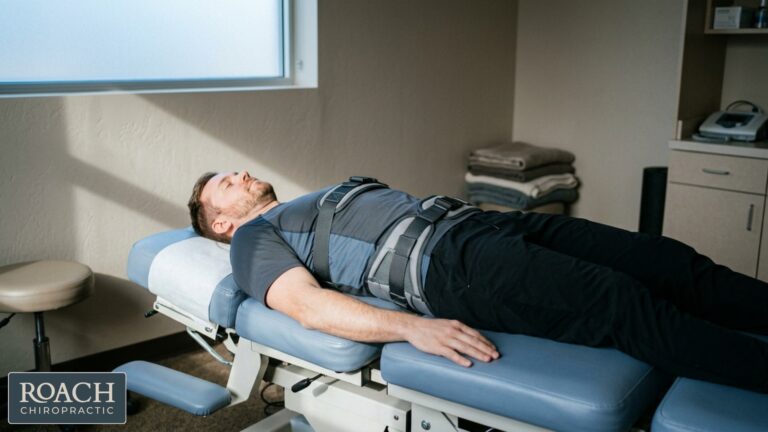
These signals suggest a structural issue — a disc herniation, facet irritation, or nerve compression — that requires hands-on chiropractic evaluation, not more self-care. Roach Chiropractic in Bedford serves patients across the region, and as one of the trusted Halifax chiropractors, the team offers non-invasive, evidence-informed care tailored to your specific spinal pattern.
Restore Your Lower Back Curve — Starting Today
Eight minutes of consistent daily movement — the McGill Big 3 exercises, a sciatic stretch, and targeted rib stretches — is enough to begin reversing the winter posture damage that flattens your spine natural curve. Do it every morning before the Bedford cold sets in for the day, and most people notice meaningful improvement within two to three weeks.
If pain persists or you’re unsure where to start, the team at Roach Chiropractic Centre (1160 Bedford Hwy, Unit 101, Bedford, NS) is ready to help. Book your assessment online at roachchiropractic.com or call 902-404-3828 — and start your journey to better health today.
Frequently Asked Questions
What actually happens to your lumbar lordosis when you sit for 10-plus hours a day during winter?
Prolonged sitting shortens the hip flexors and shuts down the deep spinal stabilisers, progressively erasing the inward curve of the lumbar spine known as lumbar lordosis. Over weeks, this flattening shifts load onto the quadratus lumborum — the QL muscle — leaving it chronically strained and contributing to morning stiffness and discomfort during sleep. Bedford’s colder months accelerate this cycle because reduced outdoor activity means the spine rarely gets the movement it needs to reset.
During the McGill Big 3 curl-up, why do you place your hands under your lower back instead of behind your head?
Positioning your hands under the lumbar curve during the curl-up preserves the spine’s natural inward bend rather than flattening it against the floor, which protects the intervertebral discs from compressive stress. Dr. Stuart McGill’s research identified this as a critical distinction — lifting from a neutral lumbar position builds core endurance without the disc aggravation associated with traditional sit-up mechanics. It’s one of the details that separates the McGill Big 3 from generic abdominal exercises.
How does the 8-minute home routine compare to seeing a chiropractor at Roach Chiropractic for a flattened lumbar curve?
The daily routine — McGill Big 3, sciatic stretch, and thoracic rib stretches — is designed for people with postural flattening caused by sedentary habits, and it works best when symptoms are stiffness, general aching, or tension without radiating pain. Chiropractic assessment becomes necessary when symptoms cross specific thresholds: leg pain that worsens with stretching, numbness or tingling below the knee, dizziness accompanying neck cracking, or sharp pain lasting beyond 48 hours. Those presentations suggest structural issues like disc herniation or nerve compression that self-care stretches cannot safely address.
How many weeks of the 8-minute morning routine should you expect before noticing a real change in lower back curve and stiffness?
Most people notice meaningful improvement in stiffness and posture within two to three weeks of consistent daily practice, according to the routine’s design. The key word is consistent — performing the McGill Big 3, figure-4 sciatic stretch, seated QL stretch, and thoracic extensions every morning before sedentary work begins compounds the benefit day over day. Missing sessions frequently resets progress, particularly during winter months when prolonged sitting continues to work against lumbar lordosis.
If upper crossed syndrome is pulling the thoracic spine into a round and flattening the lumbar curve below it, can the rib stretches alone fix the forward head posture driving the whole pattern?
The thoracic extension over a rolled towel and the open-book rotation address mid-back mobility effectively, but forward head posture rooted in upper crossed syndrome also requires the chin tucks and wall angels mentioned in the post — those target the deep neck flexors and mid-back muscles that are specifically weakened in that pattern. Rib stretches open the thoracic spine but don’t rebuild the muscular balance between the tight chest and neck muscles and their underactive opposites. For persistent craning neck posture with symptoms like frequent neck cracking or headaches, a professional postural assessment would identify how much of the pattern needs hands-on correction versus exercise alone.
Related: exercises to maximize your mid-back mobility
SHARE THIS